
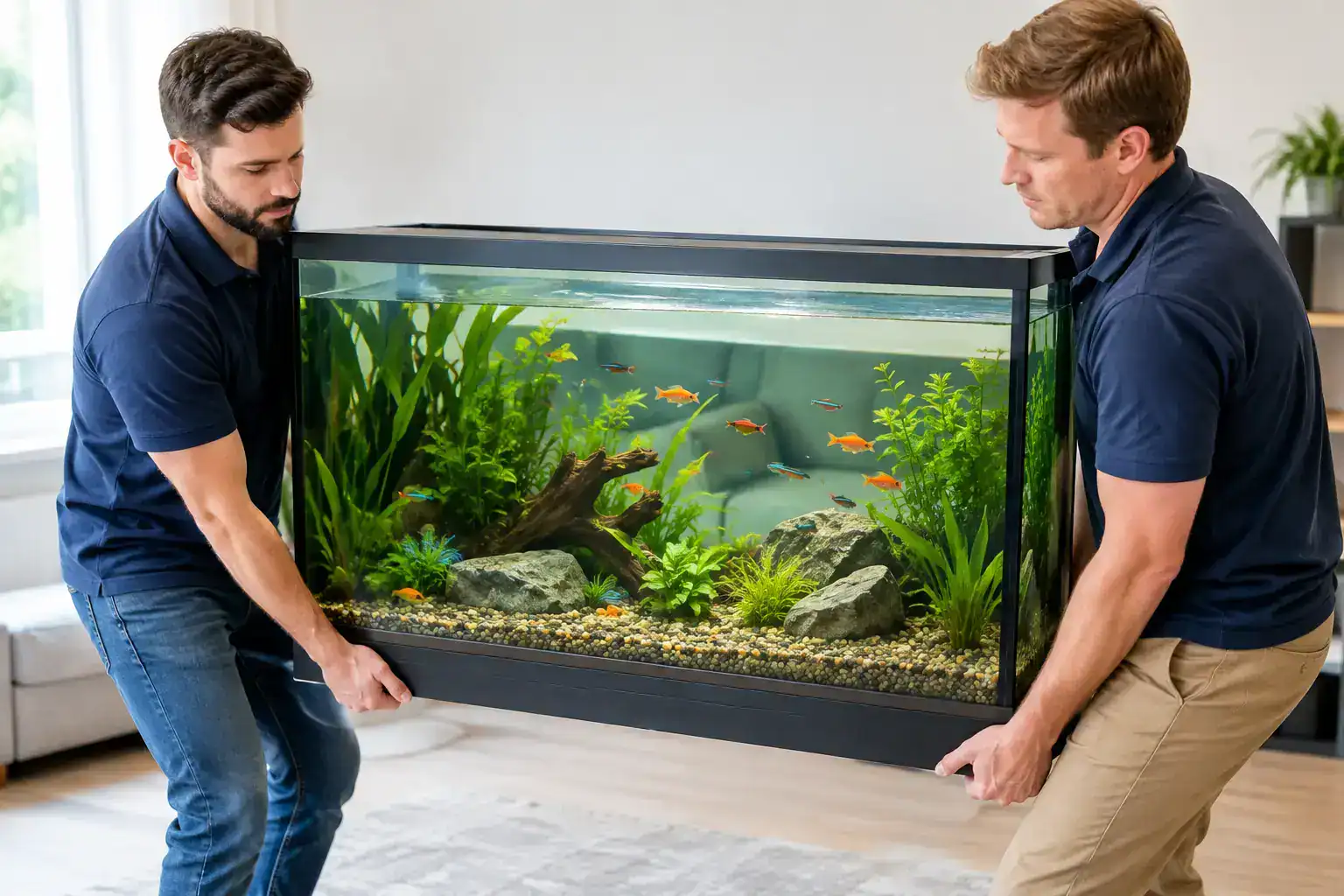
An aquarium is not just another box on moving day. It is a living system with fragile glass, electrical equipment, beneficial bacteria, and fish that can be stressed by even a short trip. To move an aquarium safely, the tank needs a plan before the movers arrive, not a last-minute scramble when the truck is loaded.
For a small freshwater tank, careful preparation may be enough to handle the move yourself. For a large, custom, saltwater, or heavily stocked aquarium, professional moving support can protect both your investment and the animals in your care. The right approach depends on the tank’s size, travel distance, livestock, and how long it will be out of operation.
Plan the Aquarium Move Before Packing Day
Start planning at least several days ahead. Confirm where the aquarium will sit in the new home or office, measure the stand and access points, and make sure the final location can support the full weight. A 55-gallon setup can weigh well over 600 pounds once water, substrate, glass, and equipment are included.
Choose a spot away from direct sun, exterior doors, strong air vents, and busy walkways. In South Florida, sunlight and indoor temperature swings can heat a tank quickly, especially after a move into a bright room. Make sure there is a nearby electrical outlet and enough clearance to maintain filters, heaters, and lights.
If you are moving into a condo, high-rise, gated community, or managed building, reserve elevators and confirm loading rules early. Some properties have strict time windows, parking requirements, or insurance rules for moving crews. Those details affect how long fish remain in transport containers, so they matter more than many people realize.
Gather the Right Supplies
You will need clean, fish-safe containers with secure lids, such as food-grade buckets or insulated coolers. Use separate containers for fish and for live plants when possible. You will also need siphon hose, towels, fish nets, water conditioner, packing paper or moving blankets for equipment, and sturdy boxes for supplies.
Keep a few gallons of treated water available for emergencies. If the move will take longer than a couple of hours, battery-powered air pumps are a smart safeguard. For saltwater tanks, have extra pre-mixed saltwater ready at the destination. Do not assume you can recreate the tank’s water conditions perfectly on arrival.
How to Move an Aquarium Safely, Step by Step
The goal is to protect the livestock while keeping the established biological filter as healthy as possible. You do not need to save every gallon of old water, but you do need to preserve the filter media and avoid turning a stable aquarium into a brand-new setup.
Stop Feeding a Day Before the Move
Do not feed fish for 24 hours before moving day. Healthy fish can safely go without food for a short period, and an empty digestive system means less waste in the transport water. This helps keep ammonia levels down while fish are confined to smaller containers.
Avoid making major changes in the days before the move. Do not deep-clean the tank, replace all filter media, add new fish, or use unfamiliar treatments. Stability is your friend.
Pack Fish and Plants First
Move fish into containers filled with their existing aquarium water. For a short local move, filled buckets with tightly secured lids often work well. Do not overfill them. Leave room at the top so water does not spill during loading and unloading.
Delicate or aggressive fish may need to travel separately. Larger fish need more room and may require purpose-made fish bags or larger containers. Keep containers shaded and temperature-stable. Never leave them in a hot vehicle while other items are being loaded.
Aquatic plants can usually travel in bags or containers with a small amount of tank water. Keep them damp and protected from extreme heat or cold. For reef tanks, coral and sensitive invertebrates deserve individual containers whenever practical to prevent damage during transport.
Protect the Filter Media
Your aquarium’s beneficial bacteria live mainly in the filter media, substrate, and other established surfaces. The filter media is the priority. Keep it wet with aquarium water in a sealed container or bag, but do not let it sit submerged without oxygen for an extended period.
For a same-day local move, place damp media in a covered bucket or cooler and restart the filter as soon as the tank is set up. If travel or delays will take many hours, use a battery air pump in the container if possible. Never rinse established filter media under tap water, which can kill the bacteria you are trying to preserve.
Drain the Tank Completely Before Lifting
This is the rule that prevents cracked glass, failed seams, and painful injuries: never lift or transport an aquarium with water inside. Even a small amount of water shifts the weight and places uneven pressure on the glass.
Save some of the old aquarium water for the fish and for refilling the tank later, but do not try to save it all. In most cases, keeping the filter media healthy is more valuable than hauling dozens of gallons of water. Drain the remaining water, remove rocks and heavy decorations, and pack those items separately.
Substrate can remain in some small tanks if it is only lightly damp and the tank will be moved carefully, but removing it is safer for larger aquariums. Gravel, sand, and rock add significant weight. In a large or rimless tank, take no chances. Empty it fully and have enough hands and equipment to lift it evenly.
Protect the Tank, Stand, and Equipment
Once empty, dry the outside of the tank and wrap it in moving blankets. Secure the blankets without putting tape directly on the glass. Keep the aquarium upright during transport whenever possible, and never stack heavy boxes on top of it.
The stand should travel separately. Inspect it for loose hardware, water damage, or weak joints before reassembly. A stand that was barely adequate before the move may fail after being bumped, disassembled, or placed on an uneven floor.
Pack heaters, lights, pumps, test kits, and cords in clearly labeled boxes. Heaters are especially fragile, so wrap them well. Take a few photos of the plumbing and wiring before disconnecting anything. Those photos can save time when reconnecting a canister filter, sump, or lighting system at the new location.
Set Up the Aquarium as Soon as You Arrive
The aquarium should be one of the first things set up, even if it is not the first item unloaded. Place and level the stand, install the empty tank, then add substrate, decorations, and saved water. Fill the rest with temperature-appropriate conditioned water.
Reconnect filters and heaters before adding fish. Let the equipment run long enough to stabilize temperature and confirm there are no leaks. Acclimate fish gradually if the new water differs in temperature or chemistry. Adding them too quickly can cause shock, even when the move itself went well.
Expect the tank to look cloudy for a day or two, especially if substrate was disturbed. Test ammonia and nitrite daily for the first week, and be ready for small water changes if readings rise. Feed lightly at first. A moved aquarium may experience a brief bacterial imbalance, and overfeeding makes it worse.
When Professional Help Makes Sense
A five-gallon tank may be manageable with good preparation. A 75-gallon tank, a reef system with a sump, or a large custom aquarium is a different kind of project. Glass panels, heavy stands, narrow hallways, staircases, and Florida heat can turn a simple plan into a high-risk move.
Rest & Relaxation Moving / Delivery can coordinate the heavy lifting and careful transport around your aquarium plan, particularly when the move also includes furniture, specialty items, elevators, or tight access conditions. Fish should travel with a prepared owner or aquarium specialist whenever possible, while trained movers handle the empty tank, stand, equipment, and the rest of the home.
The best aquarium move is not the fastest one. It is the one that keeps the tank supported, the equipment organized, and the fish calm enough to settle back into a healthy home.

