
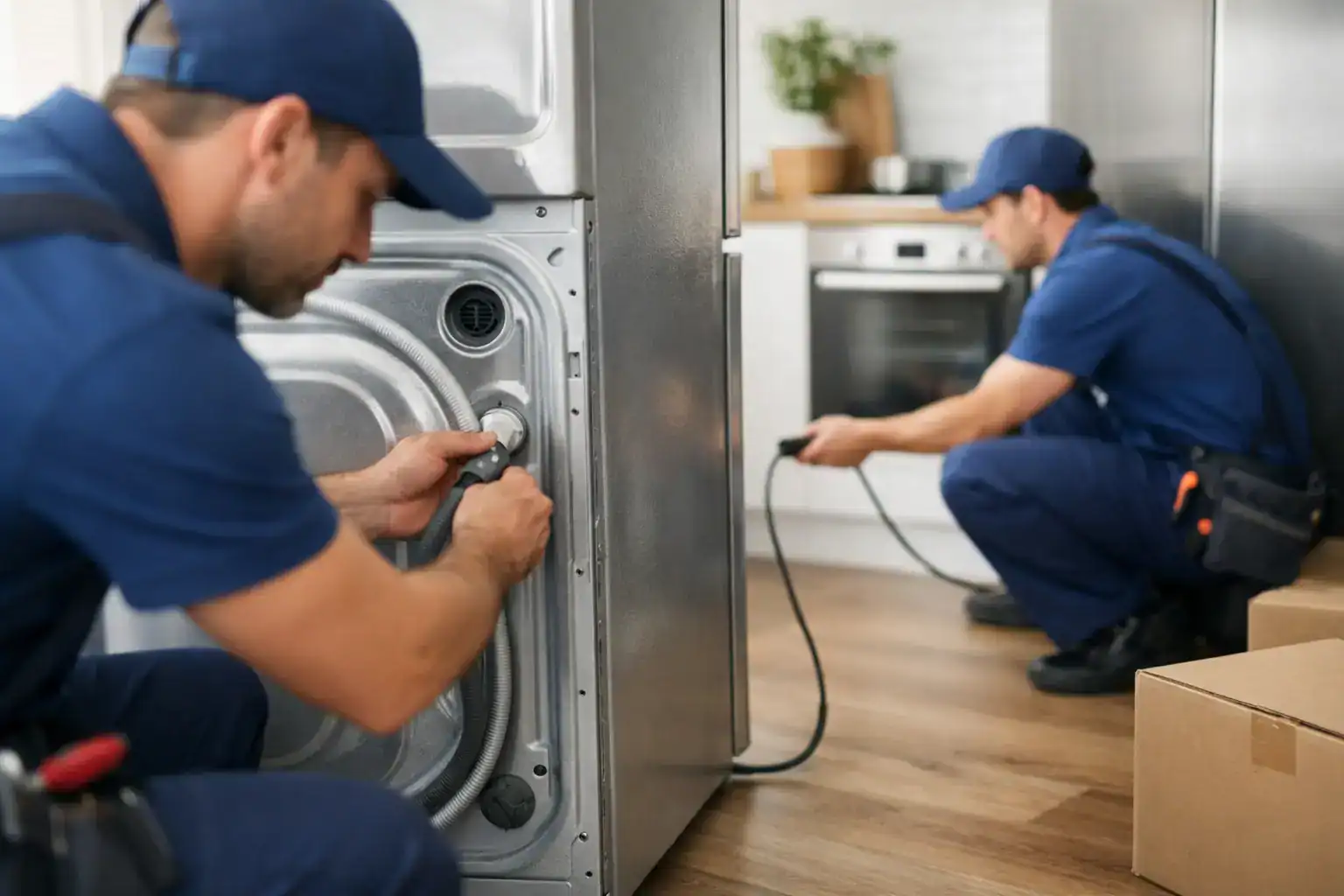
A refrigerator full of food, a washing machine with water still in the lines, and a gas dryer hooked to the wall can turn moving day into a costly delay. So, can movers disconnect appliances? Sometimes, but the safe answer depends on the appliance, its connections, the moving company’s policy, and whether licensed service is required.
At Rest & Relaxation Moving / Delivery, we want customers to know the plan before the crew arrives. Preparing appliances correctly protects your home, prevents water damage, and helps your move stay on schedule. From Door to Door, Stress No More starts with knowing which tasks belong to your movers and which need an appliance technician, plumber, or electrician.
Can Movers Disconnect Appliances Safely?
Most professional movers can move appliances that have already been disconnected, drained, cleaned, and prepared for transport. They have the equipment and training to protect heavy refrigerators, washers, dryers, ranges, and freezers while carrying them through tight hallways, elevators, and South Florida condo buildings.
Disconnecting an appliance is different from moving it. Water lines, gas lines, electrical wiring, and built-in cabinetry can involve safety risks and liability concerns. Many moving companies will not disconnect those connections unless they specifically offer that service and the job falls within their policy and licensing requirements.
A crew may be able to handle simple preparation, such as unplugging a standard cord or removing loose shelves when it is safe to do so. However, you should never assume appliance disconnection is included in a standard move. Ask during the estimate, identify every appliance you are taking, and explain whether it has water, gas, or a hardwired connection.
Which Appliances Usually Need a Professional?
The more complex the connection, the more likely you should arrange a qualified professional before moving day. This is not just about avoiding inconvenience. A small leak, damaged valve, or improperly capped gas line can create a serious problem at the home you are leaving and delay delivery at the home you are entering.
Refrigerators With Water or Ice Makers
A basic refrigerator that plugs into a wall outlet is generally straightforward once it has been emptied and defrosted. But refrigerators with ice makers or water dispensers typically have a water supply line behind them. That line should be shut off and disconnected carefully to prevent leaks.
If the water line is old, corroded, difficult to access, or connected through cabinetry, schedule an appliance professional or plumber. After disconnecting it, dry the line and secure it so it does not drip during transport.
Washers and Dryers
Washers need special attention because water can remain inside even after a regular drain cycle. Before the move, turn off the water supply, disconnect the hoses, and drain them completely. The washer drain hose should also be emptied and secured.
Front-load washers may require shipping bolts to stabilize the drum during transport. If you no longer have the bolts, check the manufacturer’s instructions or order the correct set before moving. Running a washer without proper stabilization after transport can lead to expensive damage.
Electric dryers are usually simpler once unplugged, but gas dryers are a different matter. A licensed professional should disconnect and cap a gas line. The same rule applies to gas ranges, cooktops, and other gas-powered appliances.
Dishwashers and Built-In Appliances
Built-in dishwashers, wall ovens, cooktops, microwave units, wine coolers, and under-counter ice makers often connect to plumbing, wiring, cabinetry, or all three. These are rarely a good last-minute moving-day project.
A dishwasher may have water and drain connections beneath the sink, while a wall oven may be hardwired rather than plugged in. Removal can also leave exposed openings, disconnected plumbing, or cabinet panels that need to be handled properly. Arrange professional disconnection in advance, then let the moving crew focus on carefully packing, loading, and delivering the unit.
What to Do Before Your Movers Arrive
The best appliance move begins several days before moving day. Refrigerators and freezers need time to defrost, and washers need time to dry. Waiting until the crew is at the door can mean the appliance is still leaking, too cold to safely handle, or not ready to load.
Use this preparation checklist for appliances you plan to move:
- Confirm with your moving company which appliance services are included and which are not.
- Schedule a licensed plumber, electrician, gas technician, or appliance installer when needed.
- Empty all food, ice, detergent, and loose items from the appliance.
- Defrost refrigerators and freezers at least 24 hours ahead, then wipe away all moisture.
- Drain washing machines, dishwashers, and water lines, and secure hoses and cords.
- Take photos of connections and label any removable parts, shelves, trays, and hardware.
For refrigerators, clean the interior and leave the doors slightly open after defrosting to prevent odors. If you are moving locally, do not count on keeping refrigerated food cold in the appliance itself. Pack perishables separately in coolers and make a plan to restock after delivery.
For washers, dryers, and ranges, keep hoses, vent pieces, brackets, and manufacturer parts together in a labeled bag. Do not tape the bag to a finished surface where adhesive could leave residue. Instead, place it inside the appliance drum, secure it in a clearly marked box, or give it directly to the person coordinating the move.
Plan for Reconnection at the New Home
Disconnection gets most of the attention, but reconnection deserves just as much planning. Your new home may have different hookups, outlet types, gas connections, drain locations, cabinet clearances, or water-line positions than your current home.
Measure the appliance and the destination space before moving. This matters especially in condos, townhomes, and older South Florida properties where kitchens and laundry closets may be tight. A refrigerator that fit perfectly in one home may not clear the doorway, elevator, or cabinet opening at the next one.
Ask a qualified installer to reconnect appliances involving gas, plumbing, hardwiring, venting, or water filtration. They can also check for leaks, level the appliance, and confirm it is operating correctly. Movers can place an appliance where you want it, but testing a gas line or connecting a water supply is a separate service unless specifically arranged.
It is also wise to keep appliances upright during transport whenever possible. Refrigerators, freezers, and some washing machines can be damaged when laid on their side. If a refrigerator must be tilted or transported differently due to access limitations, ask the manufacturer or appliance professional how long it should stand upright before being plugged in at the new home.
Avoid Common Appliance Moving-Day Delays
Most appliance issues come down to unclear expectations. A resident assumes the movers will disconnect the washer. The crew arrives and finds active water lines. Or a gas range is ready to go, but the gas supply has not been professionally capped. The result is a delay that could have been prevented with one early conversation.
Building rules can add another layer. Many apartment and condo communities in Fort Lauderdale, Miami-Dade, Boca Raton, Delray Beach, and West Palm Beach require elevator reservations, certificates of insurance, approved moving hours, and protective coverings. If an appliance is being delivered to an upper-floor unit, tell your mover about elevator dimensions, loading dock access, stairs, and hallway turns before the move is booked.
Parking matters, too. A crew can work faster and safer when the truck has legal, close access to both properties. In gated communities or busy urban areas, reserve parking and notify the property manager ahead of time. That gives everyone more time to focus on careful handling instead of solving access problems at the curb.
The Smart Way to Handle Appliance Moves
Treat appliance disconnection as part of your moving plan, not an extra chore for moving morning. During your estimate, make a complete list of what is moving and describe each item honestly. Mention water lines, gas hookups, built-in installations, stairs, elevators, and tight access points.
A dependable moving crew can handle the heavy lifting, protect your floors and belongings, and transport your appliances with care. When qualified professionals handle the connections and movers handle the move, each part of the job is done by the right people. That simple bit of planning can keep your move safer, cleaner, and far less stressful.

