
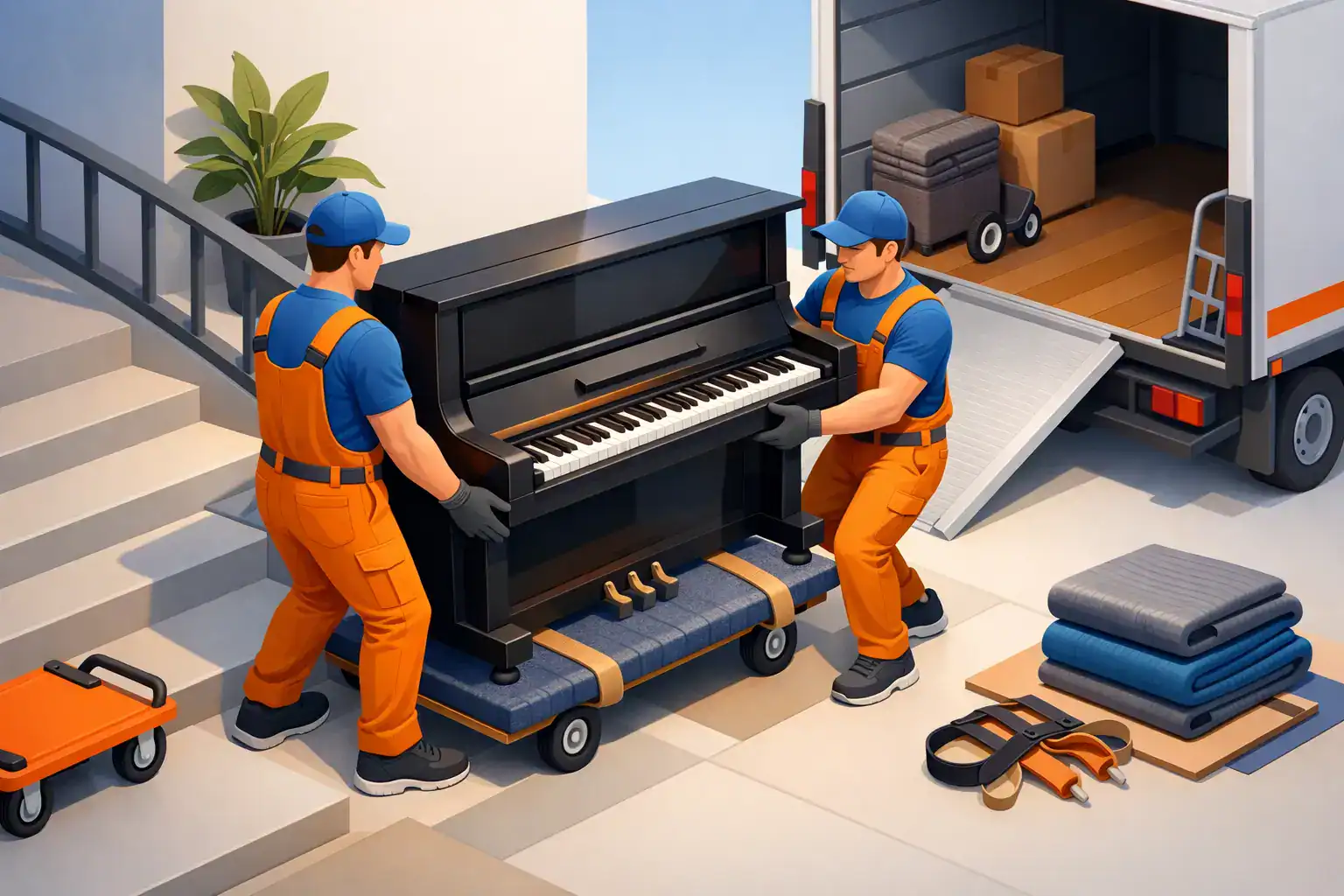
A piano can turn a simple move into the hardest part of the day. It is heavy, awkward, top-loaded, and easy to damage if one step goes wrong. If you are wondering how to move a piano safely, the short answer is this: plan carefully, use the right equipment, and know when the job is better left to trained movers.
Unlike a sofa or dining table, a piano is not just large furniture. It is a delicate instrument with thousands of moving parts inside. Even a small upright can weigh several hundred pounds, while baby grand and grand pianos can push the job into specialty-moving territory fast. That means protecting the piano matters, but protecting floors, walls, door frames, and the people doing the lifting matters just as much.
Why piano moves go wrong so quickly
Most piano moving accidents happen because people underestimate the combination of weight and shape. A piano does not carry like a box. Its weight is uneven, its legs are vulnerable, and the outer finish scratches easily. On top of that, stairs, tight turns, elevators, and wet walkways can change the risk level in a matter of seconds.
In South Florida, there is another layer to think about. Condos, gated communities, service elevators, narrow hallways, parking restrictions, and sudden rain can complicate a move that looked simple on paper. A piano move is rarely just about strength. It is about control, access, timing, and experience.
How to move a piano safely: start with the right assessment
Before anyone touches the piano, figure out exactly what you are moving and what path it needs to take. Upright pianos, studio pianos, spinets, baby grands, and full grands each require different handling. A small upright may be manageable with the right crew and equipment. A grand piano usually means partial disassembly and a much more technical process.
Measure everything. That includes the piano itself, but also doorways, hallways, stair widths, elevator interiors, truck access points, and any tight corners. Do not guess. One missed measurement can leave you stuck halfway through the move with a piano that cannot pivot where you expected.
Also look at the surface conditions. Tile, hardwood, carpet, concrete, ramps, and exterior walkways all affect traction and wheel movement. If the route includes steps, uneven ground, or long carries, the risk goes up. That is often the point where a do-it-yourself plan stops making financial sense.
Equipment matters more than muscle
If you want to know how to move a piano safely, think less about lifting power and more about control. The proper equipment is what keeps the instrument stable and helps prevent injuries.
At minimum, the job usually calls for heavy-duty moving straps, thick moving blankets, strong tape or wrap to secure padding, a piano board or skid for certain models, and a heavy-duty dolly rated for the piano’s weight. Gloves with grip can help, but they are not a replacement for technique. For grand pianos, you may also need tools to remove legs, pedals, and the lyre assembly safely.
Household dollies and basic hand trucks are not enough. They are made for boxes and appliances, not for a high-value instrument with fragile legs and a shifting center of gravity. The wrong equipment creates false confidence, and that is when floors get gouged and pianos tip.
Protect the piano before it moves an inch
Close and lock the keyboard lid if the piano has a lock. If it does not, secure it gently so it cannot swing open during transport. Wrap the entire body in thick moving blankets, paying close attention to corners, legs, and finished surfaces. Tape should never touch the piano’s finish directly.
For upright pianos, pedals and lower edges need extra care because those areas tend to bump first. For grand and baby grand pianos, the move is more involved. The lid is typically secured, the music rack may be removed, and the legs are usually taken off one at a time while the piano is supported properly and placed onto a piano board.
This is where many DIY moves go sideways. Piano legs are not designed to bear the full stress of being rolled over uneven surfaces or handled like standard furniture. Moving a piano by its legs is one of the fastest ways to cause expensive damage.
The safest way to move an upright piano
An upright piano is usually moved in an upright position, not laid flat unless a trained team has a specific reason and proper support. The crew should keep the piano balanced and move slowly, communicating constantly. One person calling the move helps avoid confusion at thresholds, corners, and ramps.
The piano is carefully lifted just enough to position the dolly, then strapped securely. Once it is on the dolly, the goal is smooth, controlled movement. Quick turns and sudden stops are where things get unstable. When crossing a doorway or bump, it helps to pause, reset hand positions, and move one small section at a time.
If stairs are involved, the danger level rises sharply. Even a short staircase can put too much strain on an untrained crew. At that point, professional help is usually the safer and less costly choice.
Moving a grand piano is a different job
Grand and baby grand pianos are in their own category. They often need partial disassembly, custom padding, and a piano board to keep the frame secure. The legs are removed carefully, the body is stabilized, and the instrument is strapped down in a way that protects both structure and finish.
This is not a move for a few strong friends on a Saturday morning. Grand pianos are valuable, difficult to balance, and much easier to damage during loading and unloading. Even if the path inside the home seems manageable, truck loading adds another challenge. The piano must be secured so it cannot shift in transit, especially on longer drives or roads with uneven pavement.
Loading, transport, and setup still require care
Getting the piano out of the house is only half the job. It should be loaded into a truck with a liftgate or ramp that can handle the weight safely. Inside the truck, the piano must be positioned and strapped to prevent movement. Blankets help with surface protection, but secure tie-downs are what keep the instrument from sliding.
Once it arrives, the same level of planning matters on the way in. Freshly painted walls, narrow entryways, slick tile floors, and apartment building rules can all create new problems. If the piano was disassembled, it should be reassembled carefully and placed where you want it before the team leaves. Moving it again later across the room or onto a rug can still cause damage if done carelessly.
After the move, give the piano time to adjust to its new environment. Temperature and humidity changes can affect tuning. Even with a perfect move, most pianos benefit from being tuned after they have settled in.
When hiring professionals is the smarter move
There is a difference between saving money and taking on unnecessary risk. If your piano move includes stairs, tight turns, elevator coordination, long carries, or a high-value instrument, professional movers are usually the better option. The same goes for apartment and condo moves throughout South Florida, where building access and scheduling windows can make timing more complicated.
A trained piano moving team does more than lift. They assess the route, bring the right equipment, protect the instrument, and reduce the chances of injury or property damage. That can save money in the long run when you consider the cost of floor repairs, wall damage, truck rental issues, or piano restoration.
For homeowners and businesses who want less stress and more confidence, working with an experienced local mover can make the process much easier. Companies like Rest & Relaxation Moving / Delivery understand that specialty moves require a different level of preparation, especially in South Florida buildings and neighborhoods where access is rarely as simple as curb-to-door.
Mistakes to avoid if you try to move a piano yourself
The most common mistakes are using too few people, using the wrong dolly, lifting by the legs, skipping route measurements, and rushing the move. Another big one is assuming that because the piano is only moving across town, the process will be simple. Distance is not usually the hard part. Doorways, stairs, loading, and control are.
Trying to slide a piano across floors without protection is another expensive shortcut. So is wrapping it too lightly, or using rope and straps without understanding how to balance the load. If you feel unsure at any point, that is a sign to stop and reassess, not to push through and hope for the best.
A piano carries more than weight. It often carries memories, routines, and real value for a family or business. The safest move is the one that protects all of it, with a plan that respects how much can go wrong when a heavy, delicate instrument is treated like ordinary furniture.

