
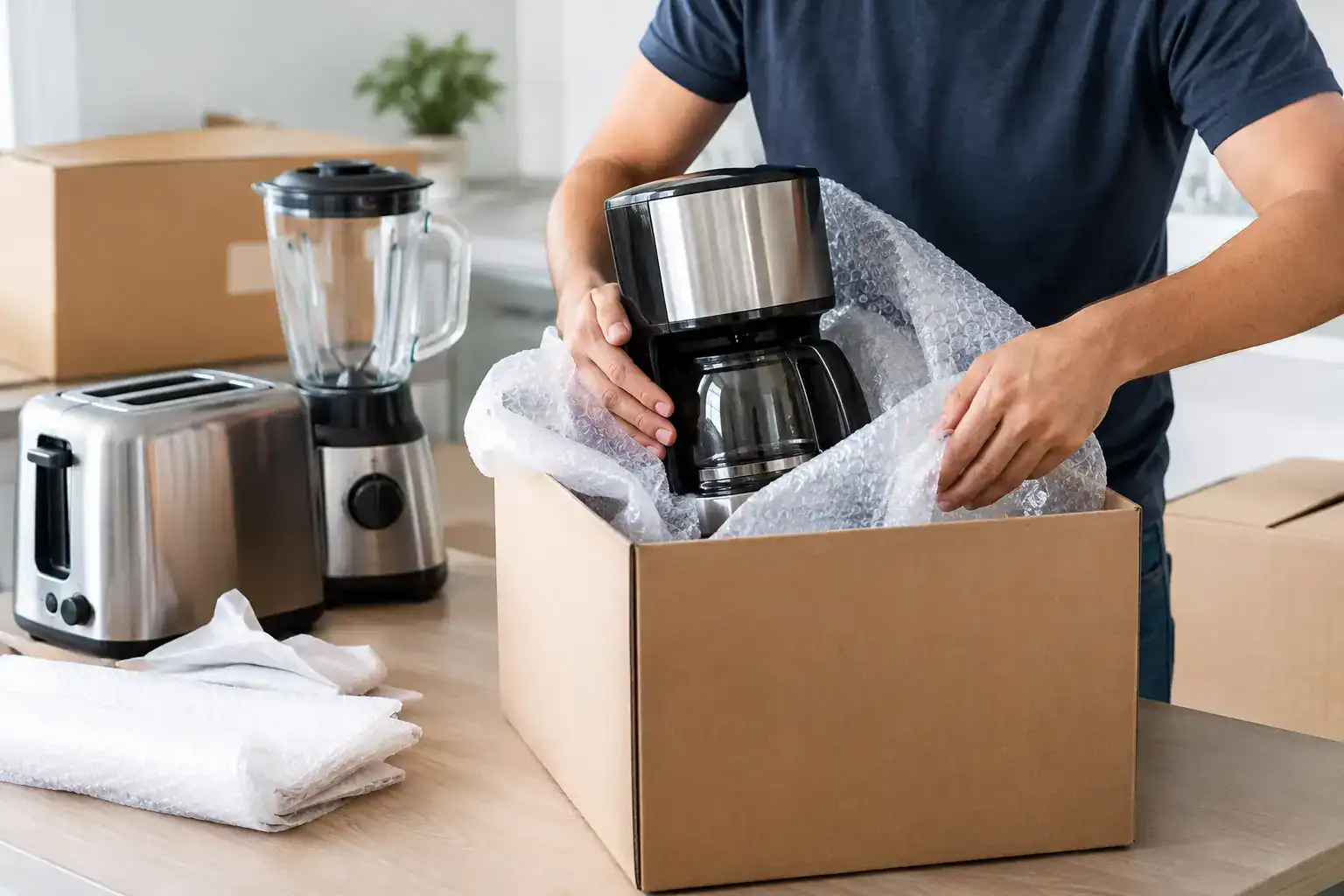
That blender you use every morning, the air fryer that still has a little grease in the basket, and the refrigerator that has been running nonstop all week all need different handling. Knowing how to pack kitchen appliances before moving day protects your belongings, keeps boxes manageable, and helps your new kitchen come together without unpleasant surprises.
Kitchen packing often takes longer than people expect because appliances are awkward, heavy, and easy to damage when packed with the wrong materials. A little planning goes a long way. Start early, clean every item thoroughly, and pack by size and fragility instead of trying to clear the entire kitchen in one afternoon.
Start With a Sort, Clean, and Unplug Plan
Before gathering boxes, decide what is worth moving. A broken toaster, a duplicate coffee maker, or a countertop appliance you have not touched in years may not deserve space on the truck. Set aside usable items to donate and discard anything that is damaged beyond repair.
For the appliances you are taking, unplug them well before packing. Small appliances should be fully cool, dry, and free of crumbs, grease, or food residue. This is more than a cleaning task. Leftover moisture can create odors, encourage mildew, and leave stains on packing paper or other belongings.
Empty water reservoirs in coffee makers, ice makers, humidifying air fryers, and espresso machines. Run a cleaning cycle if the manufacturer recommends one, then allow the appliance to air-dry completely. Remove loose components such as drip trays, filter baskets, racks, blades, and glass carafes. Wrap these parts separately so they do not shift or crack inside the appliance.
Keep manuals, specialty attachments, and small hardware together in labeled bags. Tape the bag to the appliance only if the surface will not be damaged. Otherwise, place it in the same clearly labeled box.
How to Pack Kitchen Appliances by Size
The best packing method depends on the appliance. A sturdy stand mixer needs a different approach than a lightweight toaster oven, and a refrigerator requires advance planning rather than a last-minute box.
Small countertop appliances
Original boxes are useful because they are sized for the item and often include molded inserts. If you kept them, use them. If not, choose a double-wall moving box that leaves room for padding on every side.
Wrap the appliance in plain packing paper first, then add bubble wrap around fragile or glossy surfaces. Do not place tape directly on the appliance. Secure cords by gently coiling them and fastening them with a twist tie or painter’s tape. Avoid wrapping a cord tightly around the machine, which can strain the cord or scratch the finish.
Place a layer of crumpled packing paper at the bottom of the box. Set the appliance upright whenever possible, fill empty spaces with more paper, and make sure it cannot move when you gently shake the box. Write the contents and “FRAGILE” on at least two sides.
Heavy countertop items, including stand mixers, bread makers, and food processors, should go in smaller boxes. A box that is too large may be easier to fill, but it becomes difficult to lift safely once packed. Keep these boxes under a comfortable carrying weight and never stack lighter fragile items beneath them.
Glass, blades, and removable parts
Glass blender jars, coffee pots, and air fryer doors need extra attention. Wrap each piece separately with packing paper, then add bubble wrap for protection. If a blender jar has a removable blade assembly, remove it according to the manufacturer’s instructions and wrap it in a separate labeled bundle.
Sharp blades from food processors, mandolines, and immersion blenders should be covered with several layers of packing paper or a blade guard before being placed in a small box. Mark the box clearly so no one reaches in without looking. Do not leave loose blades inside a larger appliance box.
Microwaves and toaster ovens
Remove glass turntables, racks, and trays from microwaves and toaster ovens. Wrap them separately and place them beside, not underneath, the appliance. Tape the appliance door closed with painter’s tape or moving wrap to prevent it from swinging open during carrying.
Use a snug box with cushioning on the bottom, sides, and top. The goal is to prevent movement without crushing vents, knobs, or handles. Keep the microwave upright during loading when you can.
Prepare Large Appliances Well Before Moving Day
Refrigerators, freezers, dishwashers, ranges, and washing machines are not ordinary packing jobs. They are heavy, connected to utilities, and can be damaged or cause damage if moved incorrectly.
A refrigerator or freezer should be emptied, unplugged, defrosted, cleaned, and dried before the move. Give yourself enough time for melting ice and drying – often at least 24 hours, depending on the unit. Place towels around the base while it defrosts, and leave the doors open long enough to prevent trapped odors.
Once dry, remove or secure shelves, drawers, and loose bins. Use moving wrap or straps to keep refrigerator doors closed. Never rely on regular tape alone for a heavy door. Refrigerators should be kept upright as much as possible. If the unit must be placed on its side, follow the manufacturer’s guidance and allow it to stand upright for the recommended period before plugging it in at the new home.
For appliances with water, gas, or electrical connections, arrange proper disconnection before the movers arrive. Gas ranges and certain built-in appliances may require a qualified technician. Do not attempt a utility disconnect if you are unsure. Safety comes first, and a small mistake can create a much bigger problem than a delayed move.
Use the Right Materials, Not Whatever Is Nearby
Kitchen appliances are where improvised packing can get expensive. Grocery bags, thin boxes, and dish towels alone do not provide enough protection for heavy or delicate equipment. Use clean packing paper, bubble wrap, sturdy boxes, moving blankets, stretch wrap, and strong packing tape.
Avoid packing appliances in boxes with cleaning chemicals, pantry items, or loose utensils. A heavy mixer can shift into a bottle of cleaner, while a forgotten fork can scratch a microwave door. Keep each box focused on one category and label it clearly.
If you are using a moving truck or storage unit, do not place appliances directly on the floor without protection from moisture. In South Florida, humidity and sudden rain can complicate a move quickly. Use plastic bins only for dry, lightweight items, not for very heavy appliances that may be difficult to lift safely.
Loading Matters as Much as Packing
A well-packed appliance can still be damaged if it is loaded poorly. Heavy boxes belong low in the truck, close to a wall, and secured so they cannot slide. Do not stack boxes on top of a microwave, toaster oven, or coffee machine box unless the box is clearly rated to carry the weight.
Large appliances should be moved with the proper equipment, including appliance dollies, straps, and moving blankets. They should be secured inside the truck rather than leaning freely against furniture or other appliances. Tight hallways, condo elevators, stairs, and gated community access can add time and risk, so plan these details before moving day.
If you are moving from or into a South Florida high-rise, ask management about elevator reservations, loading dock rules, parking access, and certificate requirements early. Good preparation prevents the crew from being rushed when handling items that need care.
When Professional Packing Is the Better Choice
Some moves are manageable with a few boxes and an organized weekend. Others involve large appliances, expensive equipment, limited access, or a deadline that leaves no room for trial and error. Professional packing and moving help can be especially valuable when you are managing a household move, work obligations, and building rules at the same time.
Rest & Relaxation Moving / Delivery can handle the heavy lifting with careful packing, proper equipment, and a plan built around your move. Whether you need help with a few difficult kitchen items or support from packing through setup, clear communication makes the process easier from door to door.
Before you close the last kitchen box, take a photo of complex cord connections and label each appliance for the room where it belongs. That small step can make your first meal in the new home feel a lot less like moving day.

