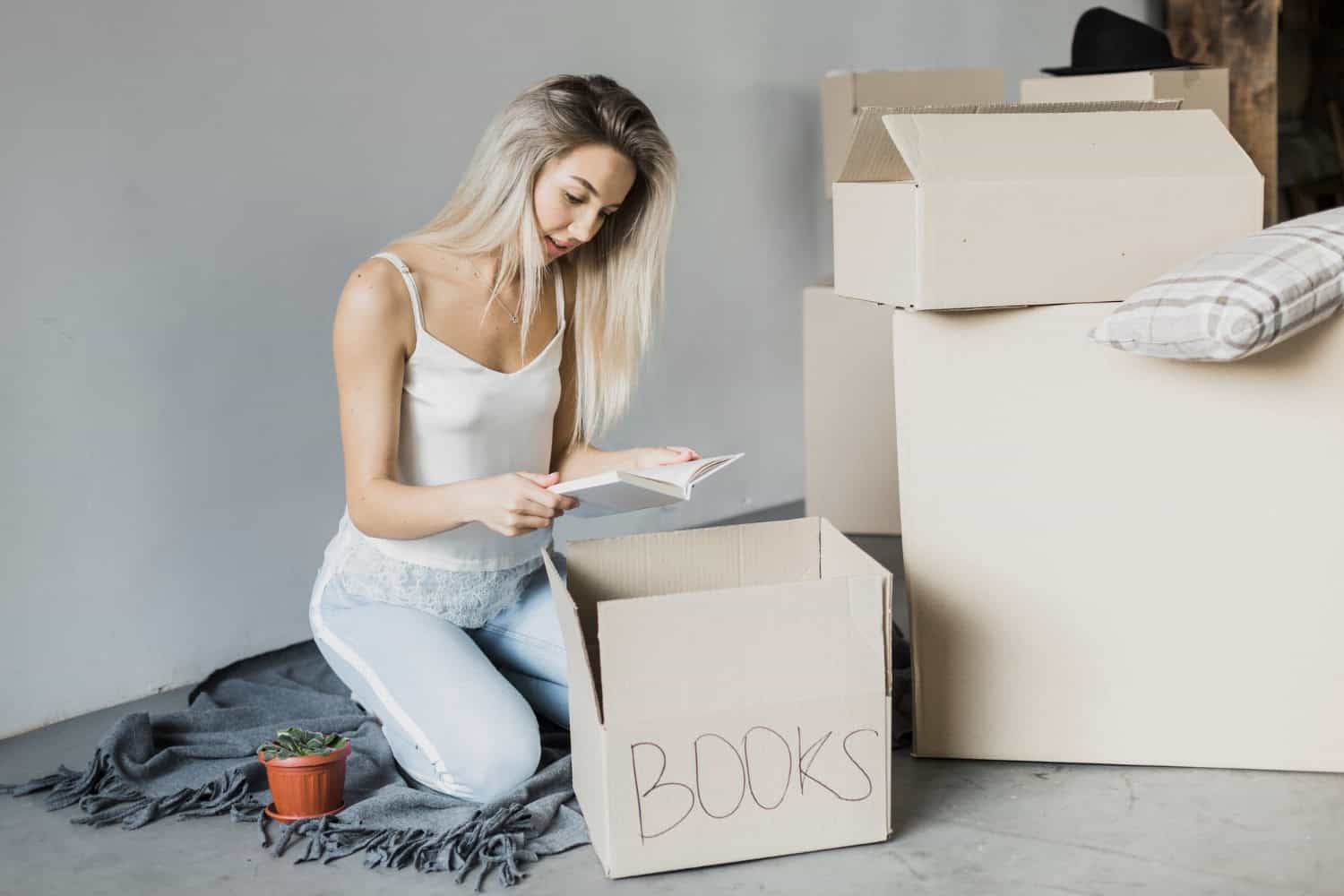
Pack books in small, sturdy boxes and stop adding books before a box becomes awkward to carry. Protect the covers, keep pages supported, and fill empty space with light packing paper. A half-full box that is safe to handle is better than a full box that strains its base or the person lifting it.
Rest & Relaxation Moving/Delivery LLC helps South Florida customers plan residential moves, including book collections and home offices. Use this checklist when packing yourself, or include the collection in a request for packing and unpacking help.
Sort the Collection Before Buying Boxes
Separate books to keep, donate, sell, or carry personally. Group the books you are moving by destination room and size. Photograph shelves if you want to restore a particular order. Set aside anything you will need immediately, such as school materials, current work references, and children’s bedtime books.
For a large collection, number each carton and keep a short list of its contents. A label such as “Office books—3 of 8—Reference shelf” helps you find the right box without opening every carton.
Supplies to Have Ready
- Small book cartons or other sound cartons rated for the load.
- Strong packing tape to reinforce the base and seal the top.
- Clean, unprinted packing paper for ordinary books and gap filling.
- Suitable protective enclosures for fragile or valuable volumes.
- A marker and a simple inventory list.
Reject damp, crushed, or split boxes. A used box can work if it is clean, dry, and structurally sound. Do not rely on handles cut into thin cardboard to support a dense load.
Match the Packing Method to the Book
| Book type | How to arrange it | What to avoid |
|---|---|---|
| Sturdy hardcovers | Use supported upright rows like a bookshelf or small flat stacks. | Gaps that let books fall over or covers press against corners. |
| Paperbacks | Use flat stacks of similar sizes with covers and page edges supported. | Bending a large paperback around a smaller book. |
| Oversized art books | Pack flat in a suitable smaller load with support beneath the full cover. | Heavy books overhanging a stack or concentrating weight on a fragile binding. |
| Rare or damaged volumes | Arrange individual protection based on their condition; seek specialist advice for valuable collections. | Tight wrapping, tape on covers, or treating loose bindings like ordinary books. |
Pack and Check Each Carton
- Prepare the box. Tape the bottom seam and edges. Add a light protective paper layer.
- Build supported rows or stacks. Keep similar sizes together and do not force a book into a gap. Avoid putting books with their page edges down and the binding unsupported.
- Watch the weight as you go. Test a partial load close to the floor. If the carton is difficult to control, split it between smaller boxes. The printed box capacity is not a personal lifting target.
- Fill gaps with light material. Use crumpled paper so the books stay in place. Do not add loose tools, glass objects, or more heavy items merely to fill the carton.
- Close without compression. The top should sit flat without pressing down on the books. Seal it and label the room, contents, carton number, and “Heavy” where appropriate.
Keep Books Dry During a Florida Move
Pack only dry books and keep cartons indoors until the loading route is ready. Protect boxes from rain and wet pavement; moisture can damage both the books and the carton. Do not seal damp books into plastic. If storage is part of the move, discuss the conditions and duration before packing a valuable collection.
At the new home, put cartons in their destination room and check that shelves are stable before filling them. Unpack damaged or valuable books carefully and document any concern before discarding the packaging.
Tell Your Mover About the Collection
Book cartons add weight quickly. Include the estimated carton count, stairs, elevator reservations, parking distance, and any fragile editions in your move details. Request an estimate and confirm whether the crew will pack the collection or move cartons you have prepared.
Continue with where to get moving boxes, packing glasses, and packing a television.

