
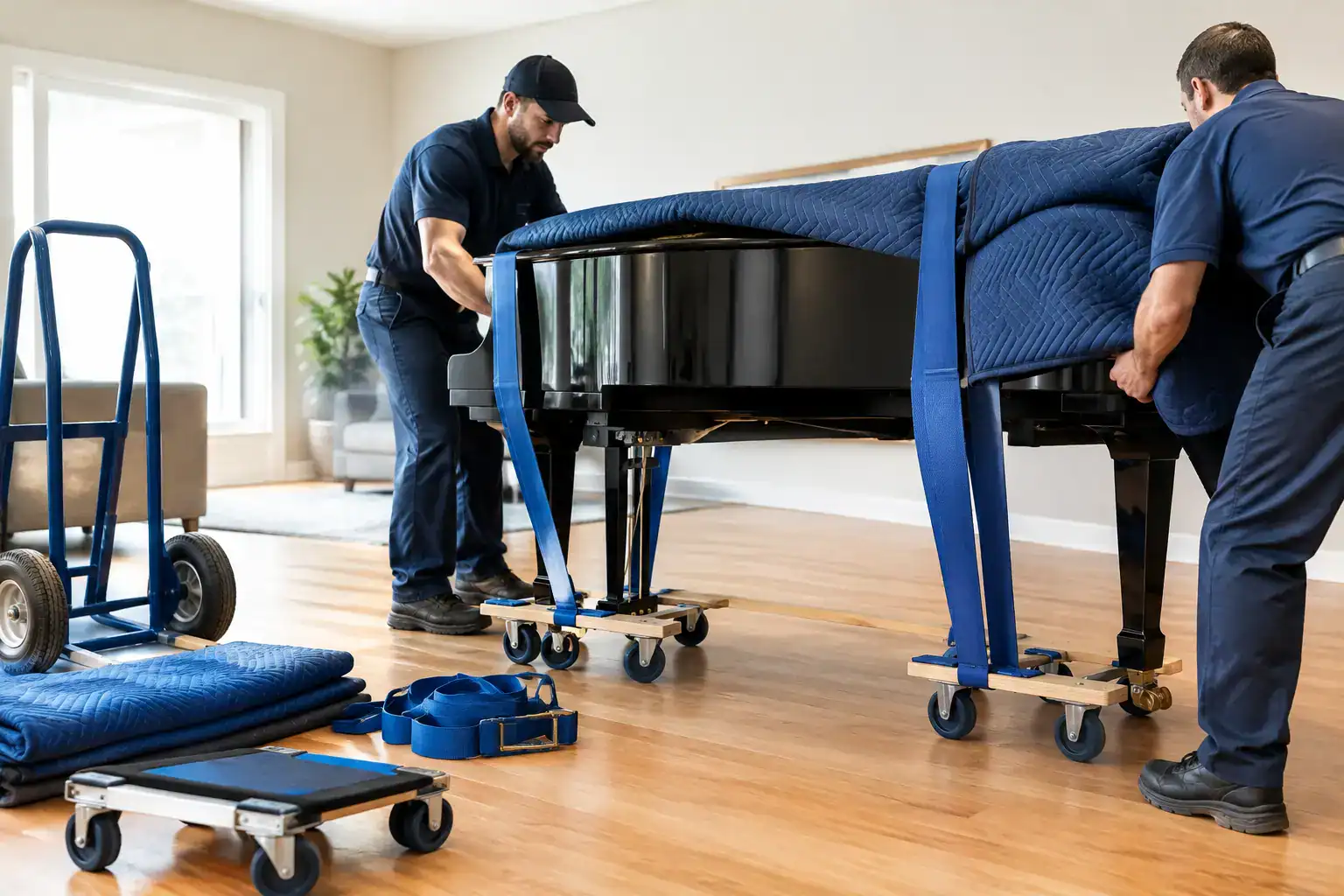
A piano is not just another heavy piece of furniture. Its weight is uneven, its finish can scratch easily, and its internal components can be affected by a hard bump, sudden shift, or moisture. The best piano moving equipment helps protect the instrument, your home, and everyone involved in the move. Just as important, that equipment has to be used by people who understand how a piano is built and how it behaves under load.
For many South Florida households, a piano move involves more than getting through a front door. There may be elevator reservations, narrow condo hallways, gated-community access, rain, steep entry steps, or limited parking near the building. The right plan matches the equipment to the piano, the property, and the route from door to door.
Why Piano Moving Requires Specialized Tools
An upright piano can weigh anywhere from roughly 300 to 800 pounds. Baby grands and grand pianos can weigh far more, with their weight concentrated in the cast-iron plate and frame. Trying to move one with a standard hand truck, household furniture sliders, or a few friends is a fast way to damage flooring, strain backs, or tip the piano.
Specialty equipment does not make a piano move risk-free. It gives trained movers control. That control matters when navigating a threshold, leveling a piano on a ramp, turning through a hallway, or bringing an instrument down stairs. It also reduces the temptation to rush, which is where many avoidable accidents happen.
A professional crew evaluates the piano’s style, weight, condition, and access points before selecting equipment. A studio upright on a ground-floor move needs a different setup than a baby grand leaving a third-floor apartment with a service elevator.
Best Piano Moving Equipment for Each Stage
Piano skid boards and heavy-duty dollies
For upright pianos, a piano skid board is one of the most useful pieces of equipment. This strong, flat platform supports the instrument and provides a stable base for securing it. The piano is padded, wrapped, positioned onto the board, and held firmly in place with rated moving straps.
Once secured, the board can be moved with a heavy-duty four-wheel piano dolly. Unlike a basic appliance dolly, a piano dolly is designed to distribute weight more evenly and roll smoothly under a substantial load. Large, non-marking wheels are especially helpful on tile, wood, and other finished flooring common in South Florida homes and condos.
The key word is secure. A dolly is not a shortcut for rolling an unprotected piano across a room. The load must be balanced and controlled at all times, particularly around corners and changes in floor level.
Padded moving blankets and protective wrap
Thick quilted moving blankets protect the piano’s cabinet, lid, pedals, and edges from dents and scratches. They also prevent metal hardware, straps, or nearby furniture from rubbing against delicate wood finishes. Professional movers use enough padding to cover vulnerable areas without adding loose material that could shift during transport.
Stretch wrap is often used over the blankets to keep the padding in place. It should not be applied directly to a piano’s finished surfaces for an extended period, especially in South Florida heat and humidity. The goal is to secure the protective layers, not seal the instrument in plastic.
Door jamb protectors, floor runners, and corner guards matter too. They may not look as dramatic as a piano dolly, but they can prevent costly damage in tight entryways, elevators, and freshly renovated homes.
Rated moving straps and team lifting gear
High-quality moving straps give a crew better leverage and help keep hands safely positioned during lifting and loading. These are not the same as ordinary tie-downs from a garage. They need to be rated for the load, checked for wear, and used with a clear lifting plan.
Shoulder harness systems and hand straps can be useful in the right situation, but they require coordination. If one person steps unevenly or loses communication with the crew, the load can shift quickly. That is why a trained team matters as much as the straps themselves.
Straps also secure the piano inside the moving truck. A piano should never ride loose in a truck, even for a short local move. It needs to be anchored against a solid wall or in a properly configured area of the truck so it cannot roll, slide, or take impact from other items.
Ramps, liftgates, and stair equipment
Loading ramps are essential for moving a piano from ground level into a truck, but not every ramp is appropriate. The ramp must have the correct weight capacity, traction, width, and angle for the load. A wet ramp after a Florida rainstorm calls for extra caution and may require the crew to pause until conditions are safe.
A liftgate can be a better option for some moves because it raises the piano vertically rather than requiring a long uphill push. It depends on the truck setup, available space, and the piano’s dimensions. At a property with a short driveway or restricted loading zone, the crew may need to choose a different approach.
Stairs are where piano moves become especially technical. Stair-climbing equipment can help in certain situations, but it is not a replacement for experienced hands, proper body positioning, and careful communication. Some staircases simply do not provide a safe route. In that case, a professional assessment may identify another exit, a ground-level alternative, or the need for additional planning.
Grand piano boards and disassembly tools
Grand and baby grand pianos require a different process. Before moving, the lid, lyre, pedals, and legs may need to be removed carefully. The piano body is then placed on a padded grand piano board or skid, secured, and moved with specialized dollies and straps.
This is not a job for improvised tools. Piano legs are not designed to support the instrument while it is being maneuvered through a home or loaded onto a truck. Improper handling can damage the legs, the rim, the soundboard, or the internal action. The disassembled components also need labeled, padded protection so they can be reinstalled correctly at delivery.
Equipment Alone Is Not the Full Solution
Buying or renting gear may seem like a way to lower moving costs, but a piano move has trade-offs. Renting a dolly and blankets can help with a simple, ground-floor move if you already have knowledgeable help. It does not provide the training needed to balance a 600-pound instrument, protect a stairway, or manage a narrow elevator entrance.
Professional piano movers bring more than equipment. They bring a crew that knows how to inspect access, assign lifting positions, protect surfaces, load the truck correctly, and adjust when the original plan changes. That experience becomes especially valuable in high-rise buildings, older homes with tight turns, and properties with strict move-in or move-out rules.
Before moving day, measure the piano and every critical point along the route: doors, hallways, turns, stairs, elevator interiors, and truck access. Let the moving company know about steps, parking restrictions, gate codes, elevator reservations, or any recent flooring work. Clear communication helps prevent last-minute surprises and allows the right equipment to arrive with the crew.
When to Call Professional Piano Movers
A professional move is the smart choice when the piano must go up or down stairs, through a tight space, across delicate flooring, or into a condo with building requirements. It is also the better option for antique pianos, family heirlooms, grands, player pianos, and exceptionally heavy uprights.
At Rest & Relaxation Moving / Delivery, piano moving is handled as a specialty service, not an afterthought added to a standard furniture move. A careful assessment helps determine the right crew size, protective materials, equipment, truck setup, and schedule for your property. That gives you a clearer expectation of the work and a safer path forward.
A piano carries memories as well as weight. Give it the care, planning, and capable hands it deserves, then let your move start with less strain and more peace of mind.

