
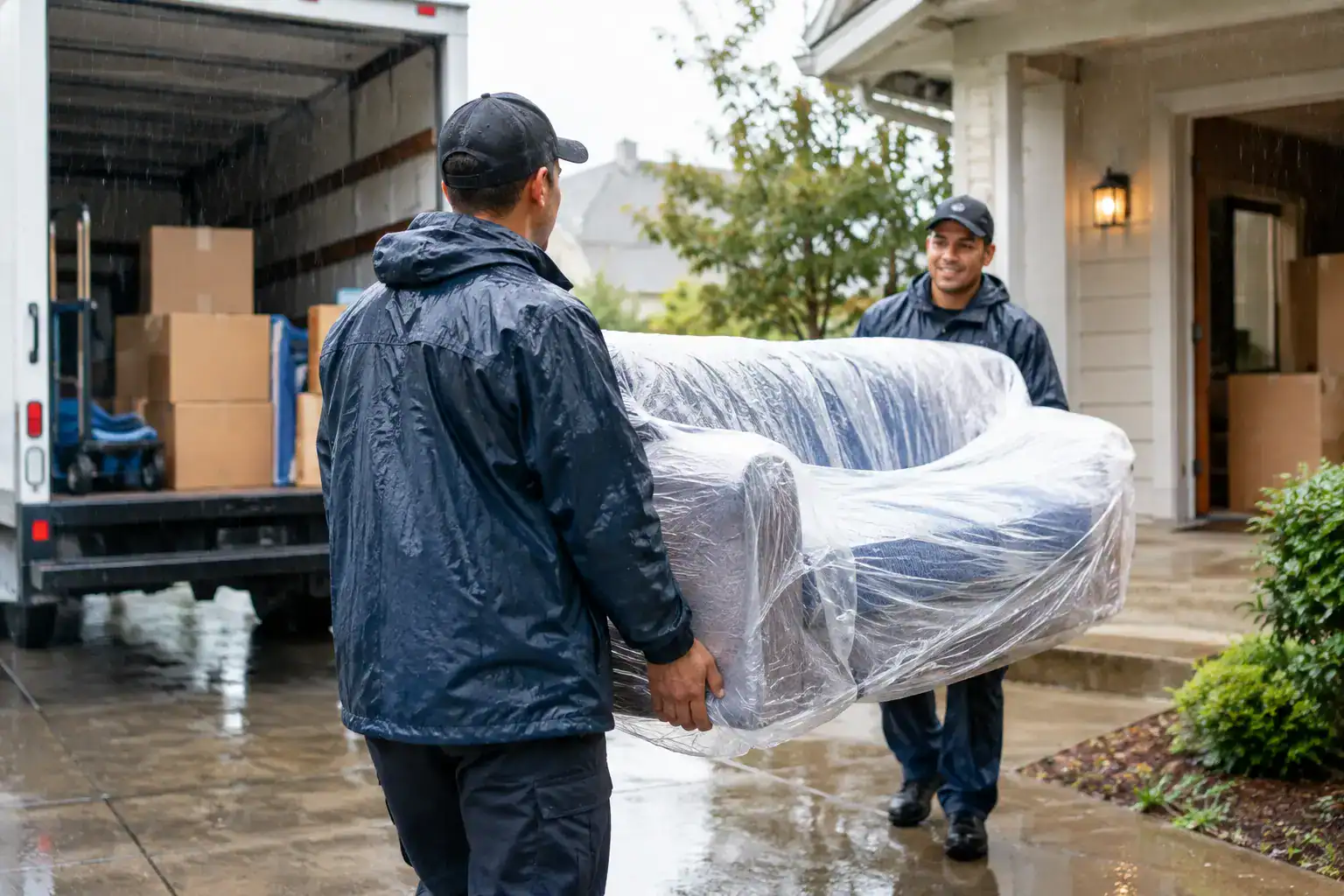
A South Florida move can start under clear skies and turn into a downpour before the first truck is loaded. Knowing how to move during rain means more than bringing umbrellas. It means protecting floors, boxes, furniture, people, and the schedule from the extra problems wet weather can create.
Rain does not automatically mean your move has to be canceled. In many cases, a prepared moving crew can work safely and keep belongings dry with the right materials, a smart loading plan, and clear communication. The key is knowing when to continue, when to adjust, and when conditions are too unsafe to ignore.
Check the Forecast, but Plan for More Than Rain
South Florida weather changes quickly, especially during storm season. Check the forecast the evening before your move and again on moving morning, paying attention to radar, lightning alerts, wind speeds, and flood advisories instead of relying only on the chance of rain.
A brief shower is manageable. Lightning, standing water, high winds, or a tropical-weather warning are different situations. Heavy rain can make roads slick, reduce visibility, and flood entryways or parking areas. Lightning creates an immediate safety risk for anyone carrying large items outdoors. A responsible mover may need to pause loading until it passes, shift the arrival time, or reschedule if local conditions make travel unsafe.
If you live in a condo, high-rise, or gated community, call the property manager before move day. Ask whether loading areas flood, whether covered access is available, and whether elevators or loading docks have special rules during severe weather. A five-minute call can prevent an expensive delay.
How to Move During Rain: Protect Belongings First
Cardboard is useful, but it is not waterproof. A wet box can weaken from the bottom up, putting dishes, books, electronics, and personal items at risk. Before moving day, pack important belongings in plastic bins when possible. For items that must go in cardboard, use sturdy boxes, avoid overpacking them, and seal every bottom seam with packing tape.
Electronics deserve extra attention. Place televisions, computers, gaming systems, and small appliances in their original packaging if you still have it. Otherwise, use fitted boxes and wrap the items in protective padding before placing them inside. Keep cords, remotes, and accessories in labeled resealable bags inside the same box.
For furniture, moving blankets provide cushioning, but they can absorb water if exposed for too long. A professional crew will typically use blankets for protection during handling and add plastic stretch wrap or furniture covers to create a moisture barrier. Mattresses, upholstered pieces, and wood furniture should never sit uncovered in rain, even for a short trip from the front door to the truck.
Keep a separate waterproof essentials bag with medications, documents, keys, chargers, a change of clothes, towels, and anything your family will need that night. If weather delays the truck or makes unpacking slower, you will not have to search through damp boxes for the basics.
Create a Dry Path From Door to Truck
The shortest route is not always the safest route. Before movers arrive, look at the path from your home to the truck and remove planters, loose mats, toys, hoses, and other trip hazards. Wet walkways are slippery, and a clear route lets the crew move carefully without carrying heavy items around obstacles.
Use old towels, absorbent runners, flattened cardboard, or protective floor covering inside entryways. These materials help reduce tracked-in water and give people better footing. Place a few dry towels near the door so hands, shoes, and small items can be dried quickly.
If there is a garage, covered porch, breezeway, or building overhang, use it as a staging area. The goal is not to pile belongings outside waiting for the truck. Instead, movers should bring items from a protected indoor space directly to the truck in a controlled flow. The less time your belongings spend outdoors, the better.
Make sure the truck can park as close to the entrance as legally possible. In Fort Lauderdale, Miami-Dade, Boca Raton, and other busy South Florida communities, parking rules, condo loading zones, and narrow driveways can complicate this step. Confirm parking access ahead of time and reserve the loading area when required.
Load With a Rain-Day Strategy
On a dry day, movers can stage boxes outside briefly to keep the process moving. During rain, that approach creates unnecessary exposure. A better plan is to load in smaller, steady batches and keep the truck organized as the crew works.
Items that are most sensitive to moisture should be loaded promptly and secured inside the truck. This includes electronics, artwork, documents, mattresses, upholstered furniture, and wooden pieces. Boxes should be loaded with their labels facing outward when possible, so they can be placed in the right rooms without opening them at the new home.
Avoid loading wet moving blankets directly against clean furniture for a long drive. If blankets become saturated, they should be changed out. It may take a little more time, but preventing moisture from sitting against wood, fabric, or leather is worth the adjustment.
A professional mover also has to balance protection with speed. Working too slowly leaves belongings exposed longer. Rushing, however, increases the chance of slips, dropped items, and damaged walls. The right pace is deliberate, coordinated, and based on what the weather is doing minute by minute.
Keep People Safe, Not Just Boxes Dry
Rain turns a physically demanding job into a more hazardous one. Wear closed-toe shoes with good traction, not flip-flops or smooth-soled sneakers. Choose clothes that let you move comfortably, and keep a rain jacket handy instead of trying to work while holding an umbrella.
Do not attempt to move a sofa, appliance, piano, gun safe, or other heavy item through wet conditions with an inexperienced group. These pieces require proper equipment, enough trained people, and a clear plan for ramps, stairs, turns, and thresholds. Wet surfaces add risk quickly, especially when the item is heavy enough that one mistake can cause injury or property damage.
If lightning is nearby, stop outdoor moving activity. No deadline is worth the risk. The same applies to flooded streets, flooded garages, strong wind gusts, or conditions that prevent the moving truck from safely reaching the property.
For families moving with children or pets, designate one dry room away from the loading route, or arrange for them to stay with a friend until the heaviest work is done. This reduces stress for everyone and keeps small feet and paws out of slippery, high-traffic areas.
Prepare the New Home Before Arrival
Rain-day moving works best when the destination is ready before the truck pulls up. Confirm that utilities are on, doors can be unlocked, elevators are reserved, and there is a protected route for unloading. If possible, place floor protection at the new home before the first box comes in.
Decide which rooms should receive boxes and furniture before unloading begins. Clear instructions prevent movers from carrying the same items through the home twice, which matters even more when the floors are wet and the weather is still active.
Once belongings are inside, inspect boxes that got wet on the outside. Move the contents into dry containers if the cardboard feels soft, sagging, or compromised. Open moisture-sensitive boxes such as books, linens, and electronics only after they have reached a dry, temperature-controlled room.
If furniture covers or plastic wrap are wet, remove them as soon as practical indoors. Wipe down hard surfaces and allow upholstered pieces to air out. Do not trap moisture under blankets or coverings overnight.
When Rescheduling Is the Better Choice
There is no prize for forcing a move through unsafe weather. If your route is flooded, the truck cannot access the property, lightning continues for hours, or a major storm warning is in effect, rescheduling may be the most practical decision. It can be frustrating, particularly when leases, closings, or elevator reservations are involved, but damaged belongings and injuries create bigger problems than a delayed move.
Clear communication matters here. Let your mover know about access concerns as soon as you see them. Ask what weather protections they use, whether they can adjust the arrival window, and what options are available if conditions worsen. A dependable moving company should give you straightforward answers, not leave you guessing.
At Rest & Relaxation Moving / Delivery, careful planning is part of making a move feel less overwhelming. From covered packing strategies to safe handling of heavy specialty items, preparation helps protect what matters when South Florida weather refuses to cooperate.
Rain may change the pace of moving day, but it does not have to take control of it. Keep the route clear, protect moisture-sensitive belongings, listen to safety guidance, and give your crew the room to work carefully. A calm, prepared approach will carry you from one door to the next with far less stress.

